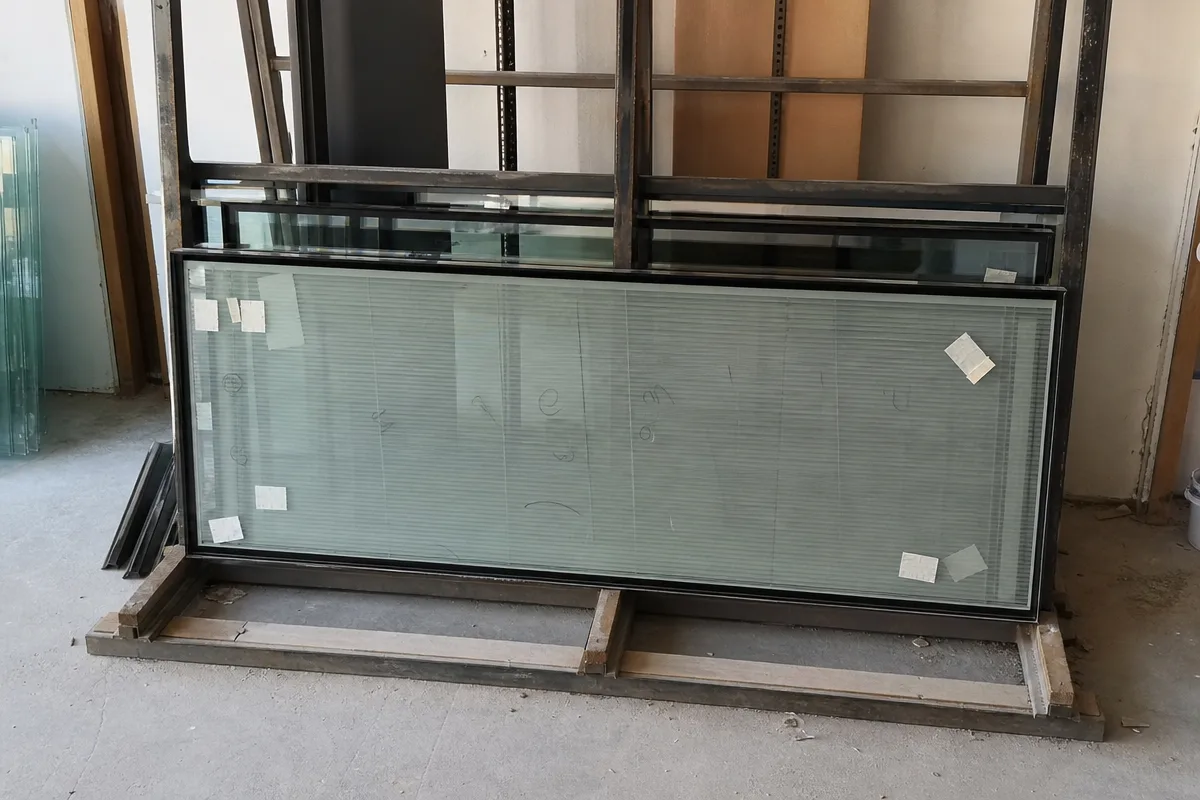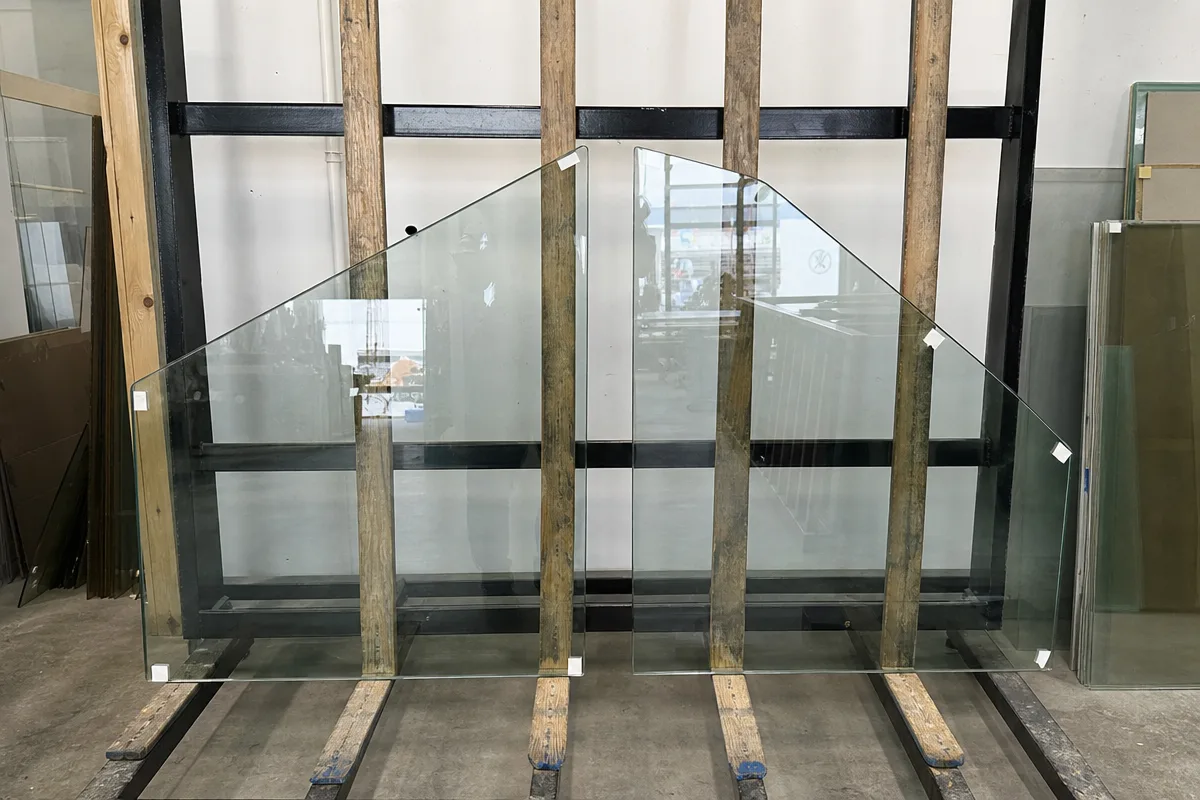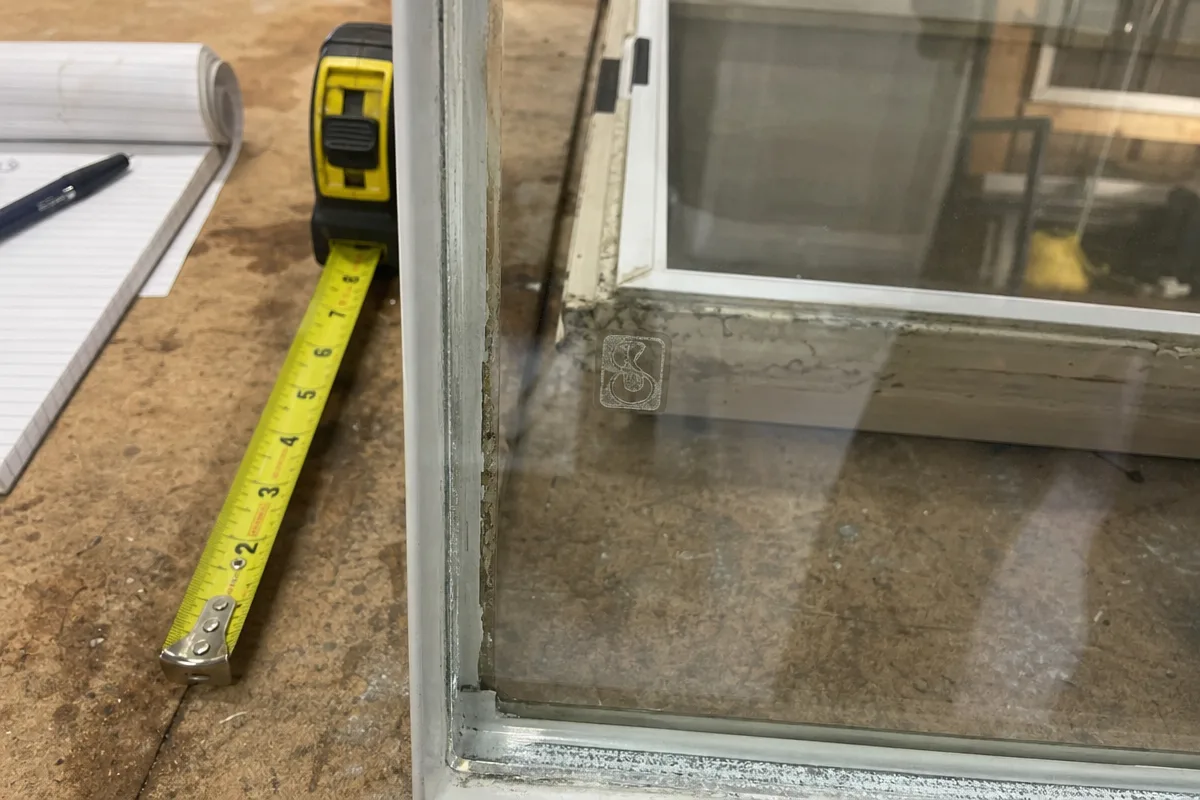
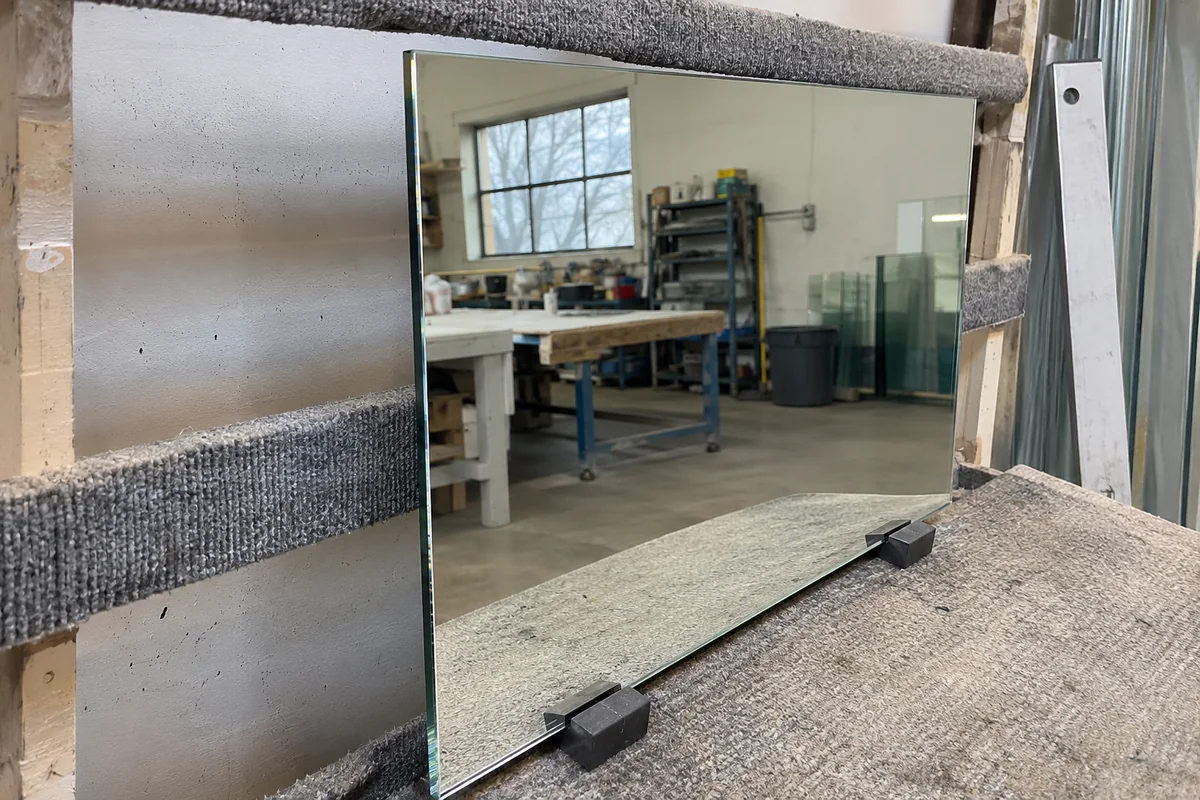
Start with finished size and a viewed face
Draw the rectangular finished outline as it will be viewed from the reflective face. Label width, height, units and the specified mirror thickness. If two panels are part of one run, give them different IDs even when the difference is only the edge treatment. Clear IDs keep the cut list, drawing and supplier confirmation referring to the same panel.
Call out the edge finish where it changes
If the left and top edges remain exposed while the other edges are covered, use that information to identify each edge on the drawing. Then state the actual finish the supplier is quoting. The word exposed describes the installation condition. The fabrication line needs the requested edge treatment and any project-specific corner requirement. If every edge gets the same finish, write it once and identify the edges it covers.
Put fabrication details on the approved revision
When a drawing includes holes or another cut-out, confirm the template, the measuring origin and which face the drawing is viewed from. Keep the shop drawing attached to the order and include the drawing revision in the supplier acknowledgment. Before releasing a pair of mirrors, compare the IDs and edge callouts line by line. A small change to the finished width or to the viewed orientation can change which edge ends up exposed.
Sources
Prepared with AI assistance using the references above.