Seven common window styles in one catalogue
Compare how each window opens, review common size examples and see prominent GlassQuote supplied-and-installed planning ranges.

Which window style do you want to see?
Each underlined row opens the exact full-page catalogue artwork.
What is a single sliding window?
One horizontal sash opens while the other side remains fixed.

What is a double sliding window?
Both horizontal sashes operate for ventilation from either side.

What is a single-hung window?
The lower sash opens vertically while the upper sash remains fixed.

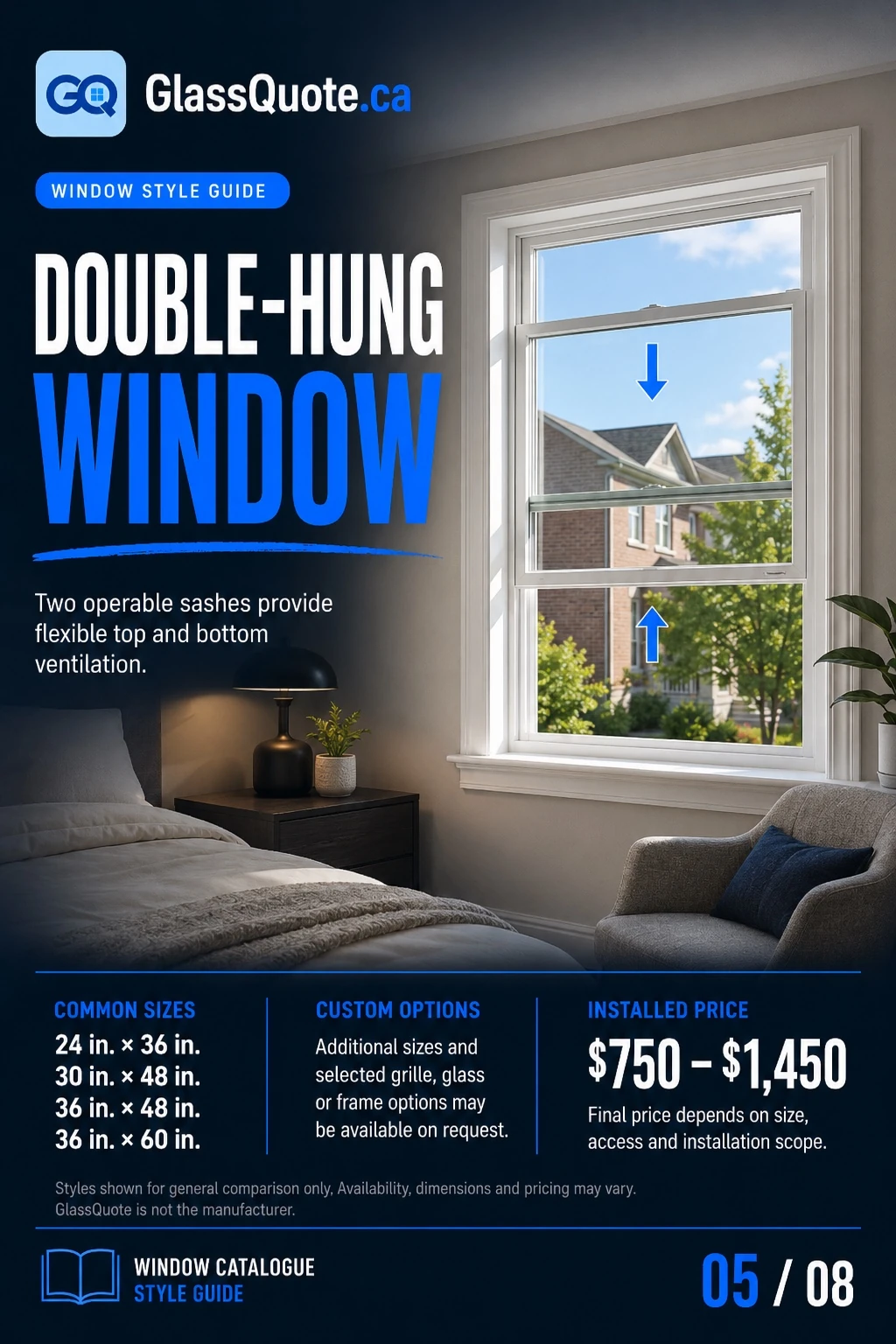
What is a double-hung window?
Both upper and lower sashes operate vertically.
What is a casement window?
A side-hinged sash opens outward using an operator.

What is an awning window?
A top-hinged sash opens outward from the bottom.

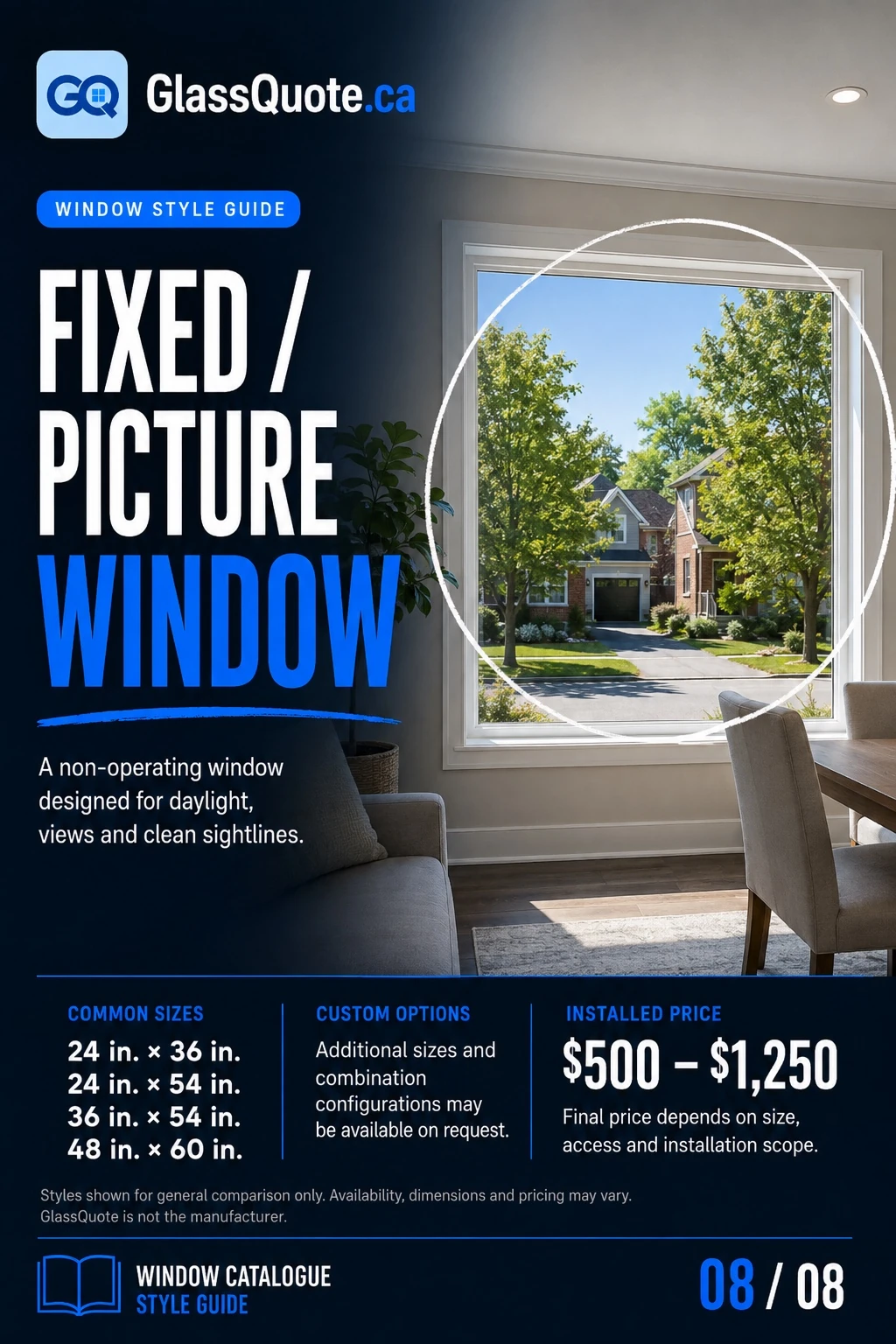
What is a fixed or picture window?
A non-operating window designed for daylight and clear views.
What should you know before using the prices?
The essential limitations stay available without crowding the catalogue pages.
Are these windows manufactured by GlassQuote.ca?
No. GlassQuote.ca does not manufacture the windows shown. The catalogue is a style and pricing guide for planning purposes.
Are the sizes and installed prices guaranteed?
No. Sizes are common examples and prices are preliminary supplied-and-installed ranges. Final dimensions, product, taxes, access, finishing and scope can change the total.
Are the room images exact product photographs?
Not necessarily. The images illustrate window style and operation. Frame details, hardware, glass, screens and proportions can differ from the final product.
What is included in an installed price range?
The range is a planning figure for supplying and installing a comparable window. The final written quote controls what is included.
Final product selection, measurements, availability, installation scope and price must be confirmed in writing before ordering.

Then confirm the opening and installation scope.
Photos and preliminary dimensions can help GlassQuote prepare a more useful planning range before final measurement.