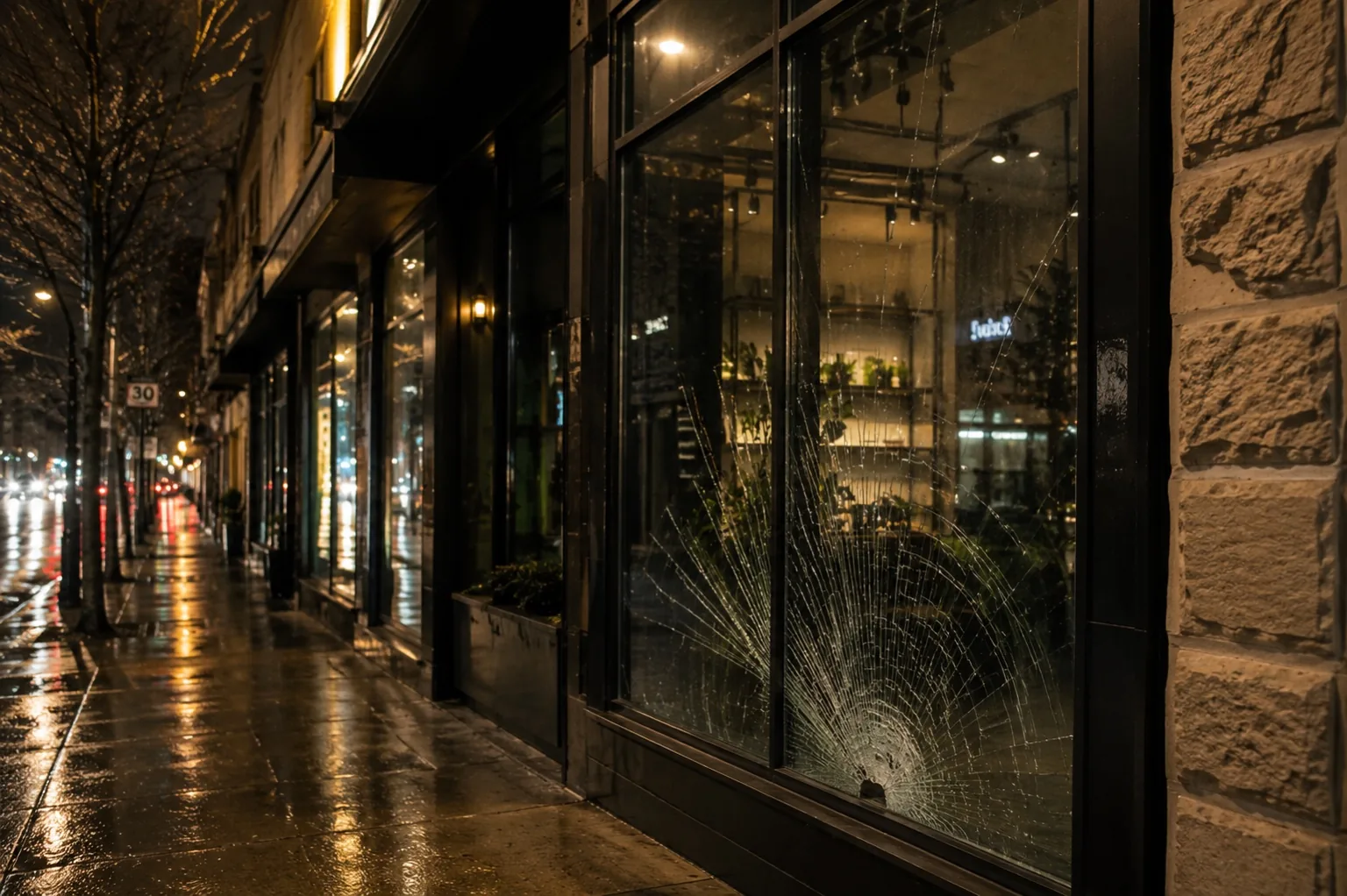
Exposed storefront
Commercial openings may need public-area control, cleanup and temporary security.
 Call/Text
Emergency cover is a temporary safety and security measure, not the final glass repair. The estimator collects the opening type, size, exposure, remaining glass, access and urgency so the request can be routed appropriately.
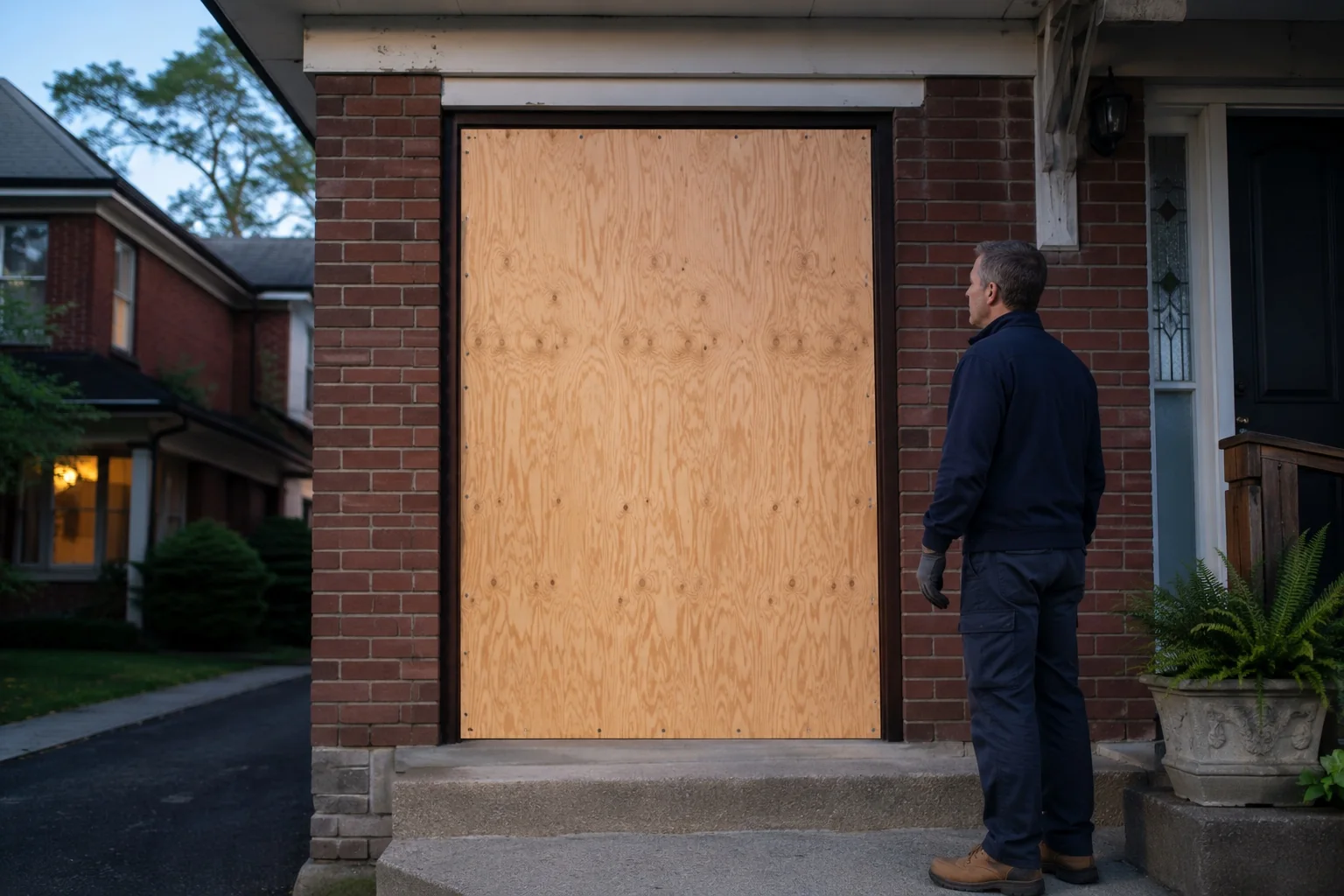
Emergency board-up is temporary protection, not the permanent glass repair. Once the area is safe, the affected opening can be measured and routed to storefront, door or window glass replacement.
Emergency board-up availability varies by location and crew capacity across Toronto and the GTA. The opening condition and safe access are confirmed before dispatch.
Custom insulated or tempered glass is rarely available instantly. When an opening is exposed, unsecured or shedding glass, temporary board-up or another protective measure may be needed before the final replacement is measured and fabricated.
People should stay clear of unstable shards and overhead glass. The online form helps organize the request, but emergencies involving injury, fire, active crime or immediate public danger should be directed to the appropriate emergency service.
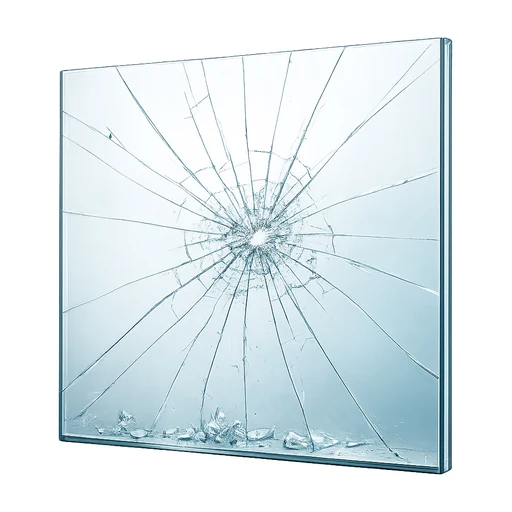
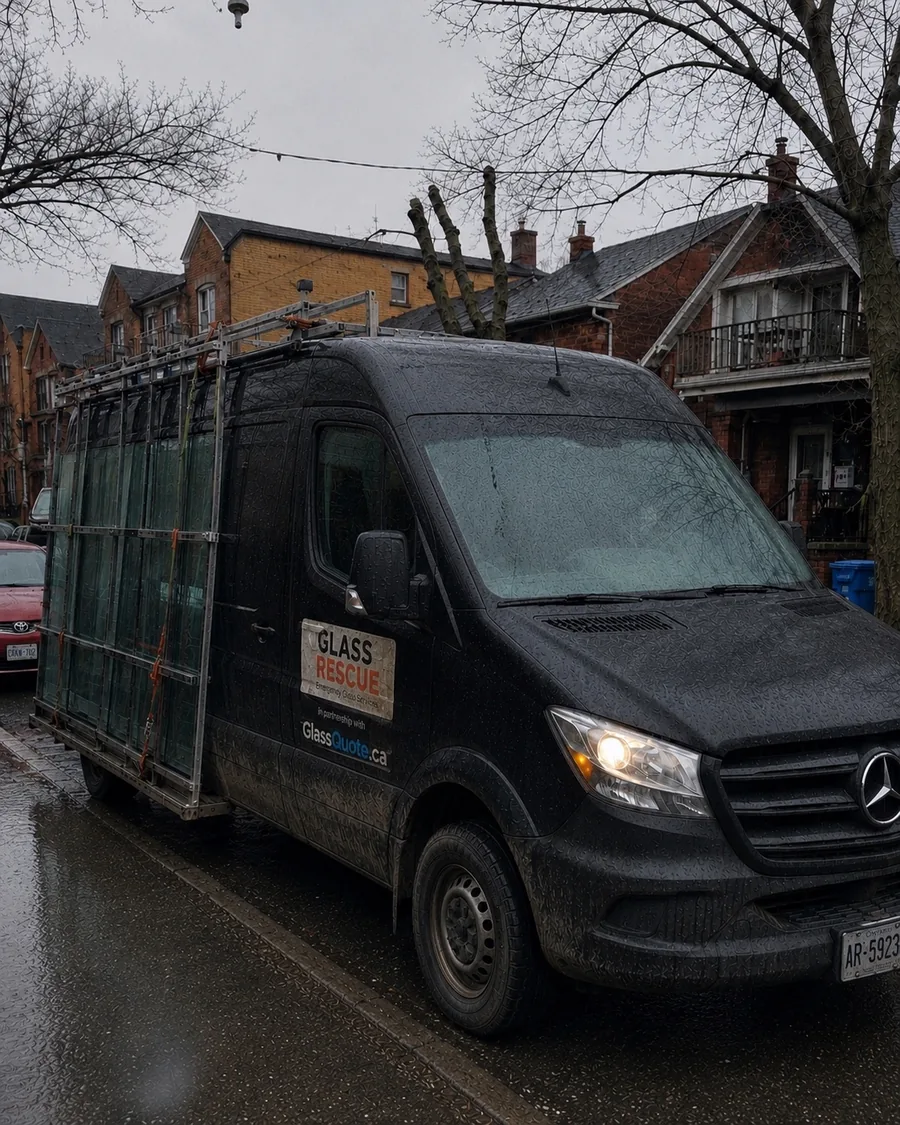
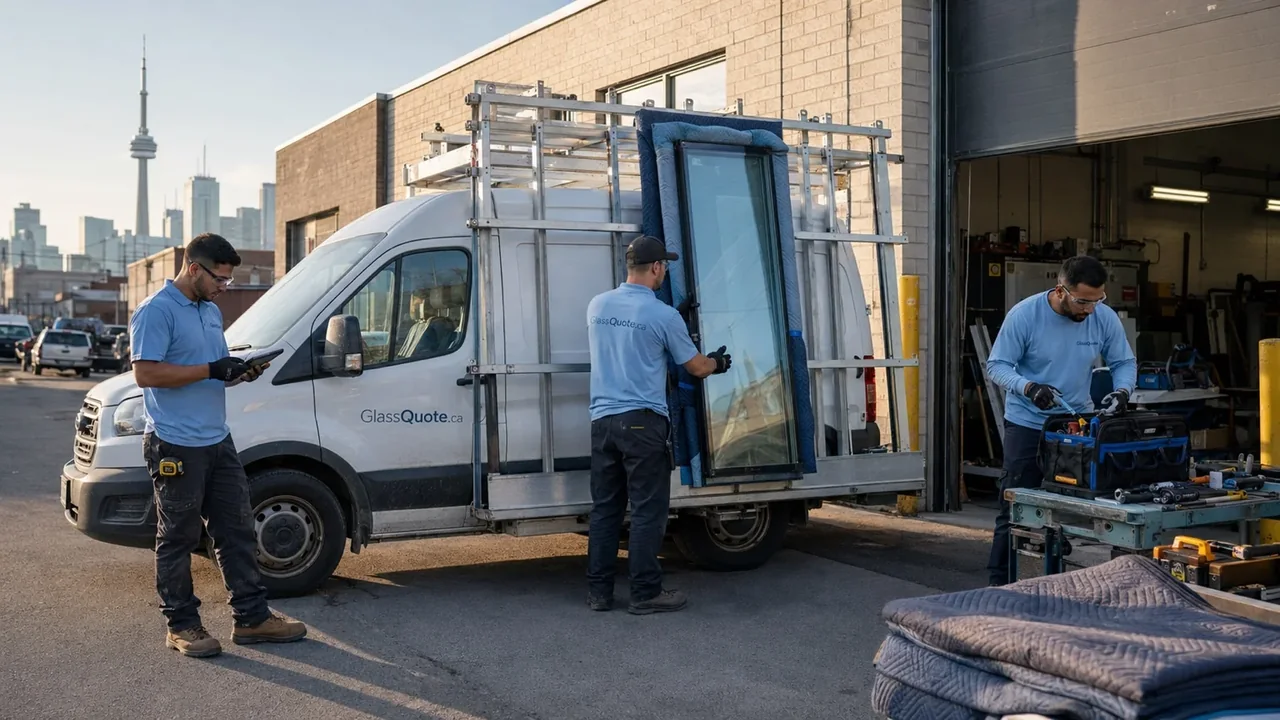
Describe whether the opening is exposed, still contains loose glass or is already secured. That determines the immediate board-up response before permanent replacement details are collected.
Commercial openings may need public-area control, cleanup and temporary security.
An exposed opening may require cover while custom glass is being produced.
Security and weather exposure can make temporary protection the first step.

Submit photos only from a safe distance and describe loose or hanging glass.
The range can change with opening size, remaining shards, access, time of day, material required, cleanup and whether a return visit is needed for final replacement.
Opening size, remaining loose material, ground-level access and the type of temporary cover shape the board-up range. Permanent glass is scoped separately after the site is secure.
Loose shards, overhead glass, public exposure and active breakage affect the response plan.
Large storefronts and door systems require more material, labour and bracing.
After-hours access, parking, elevators, security and traffic control can add complexity.
Board-up, interior cover, exterior cover, cleanup and weather protection are different tasks.
Do not touch unstable glass. Isolate the area and provide photos only from a safe position.
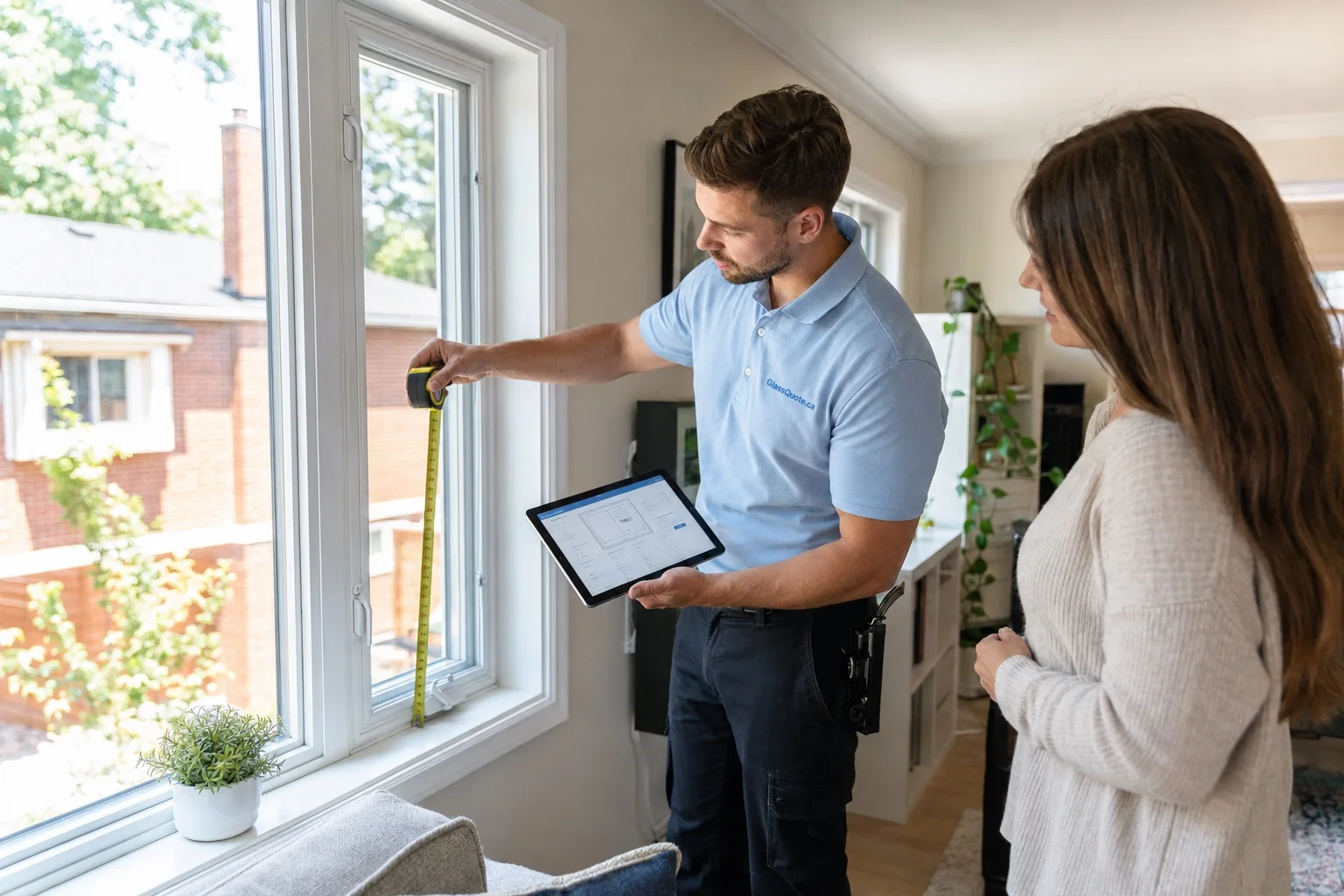
Identify residential or commercial use, size, exposure, remaining glass, access and contact information.
Temporary protection is completed first when needed. Final glass is measured, specified and scheduled separately.
A ground-floor residential pane may be protected differently from a public-facing storefront or balcony opening. The route must consider pedestrians, interior occupancy, weather, security, landlord or property-manager access and safe disposal of broken material.
For final commercial glass measurement and replacement.
View storefront glass replacement →
For the permanent residential or commercial replacement scope.
View window glass replacement →
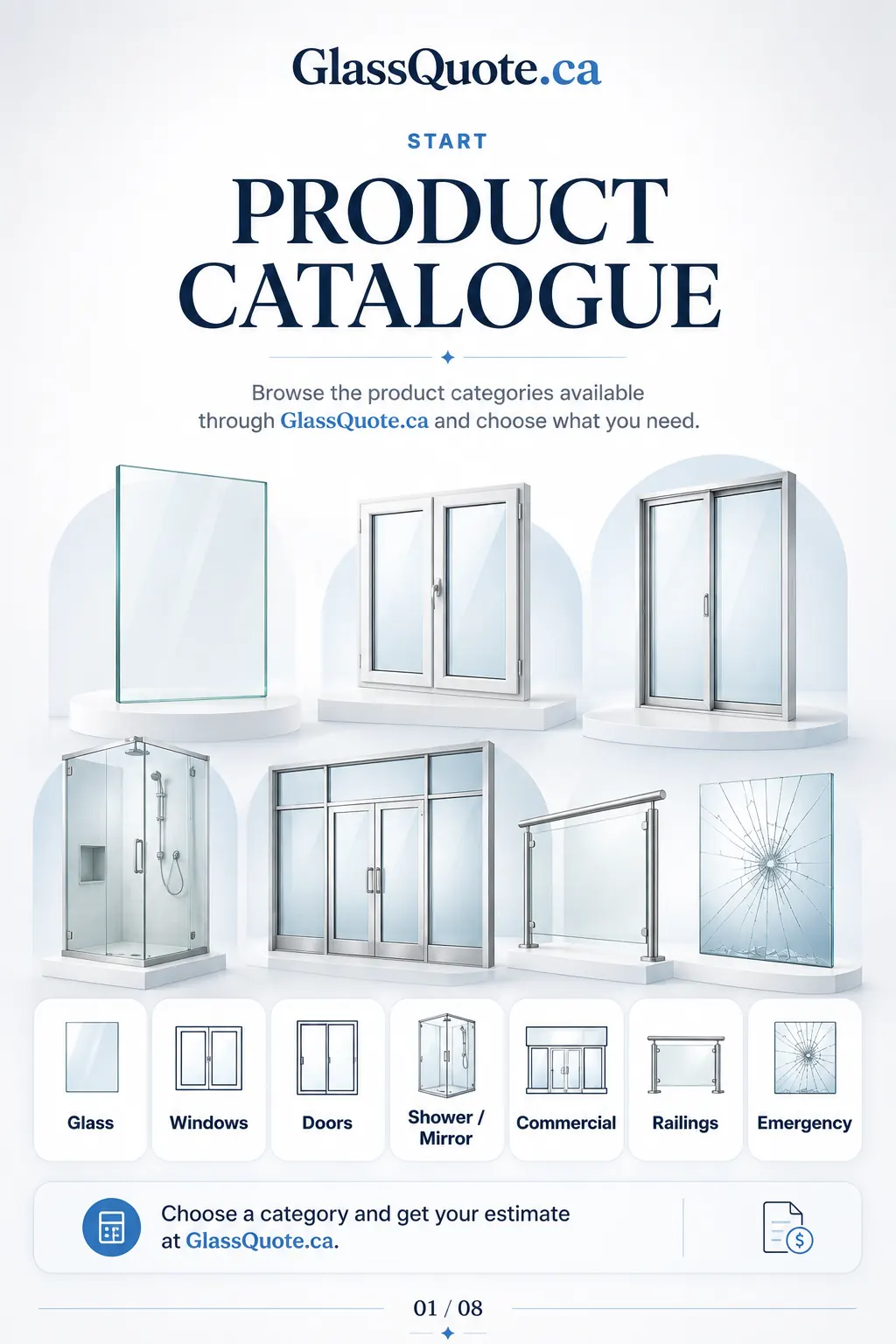
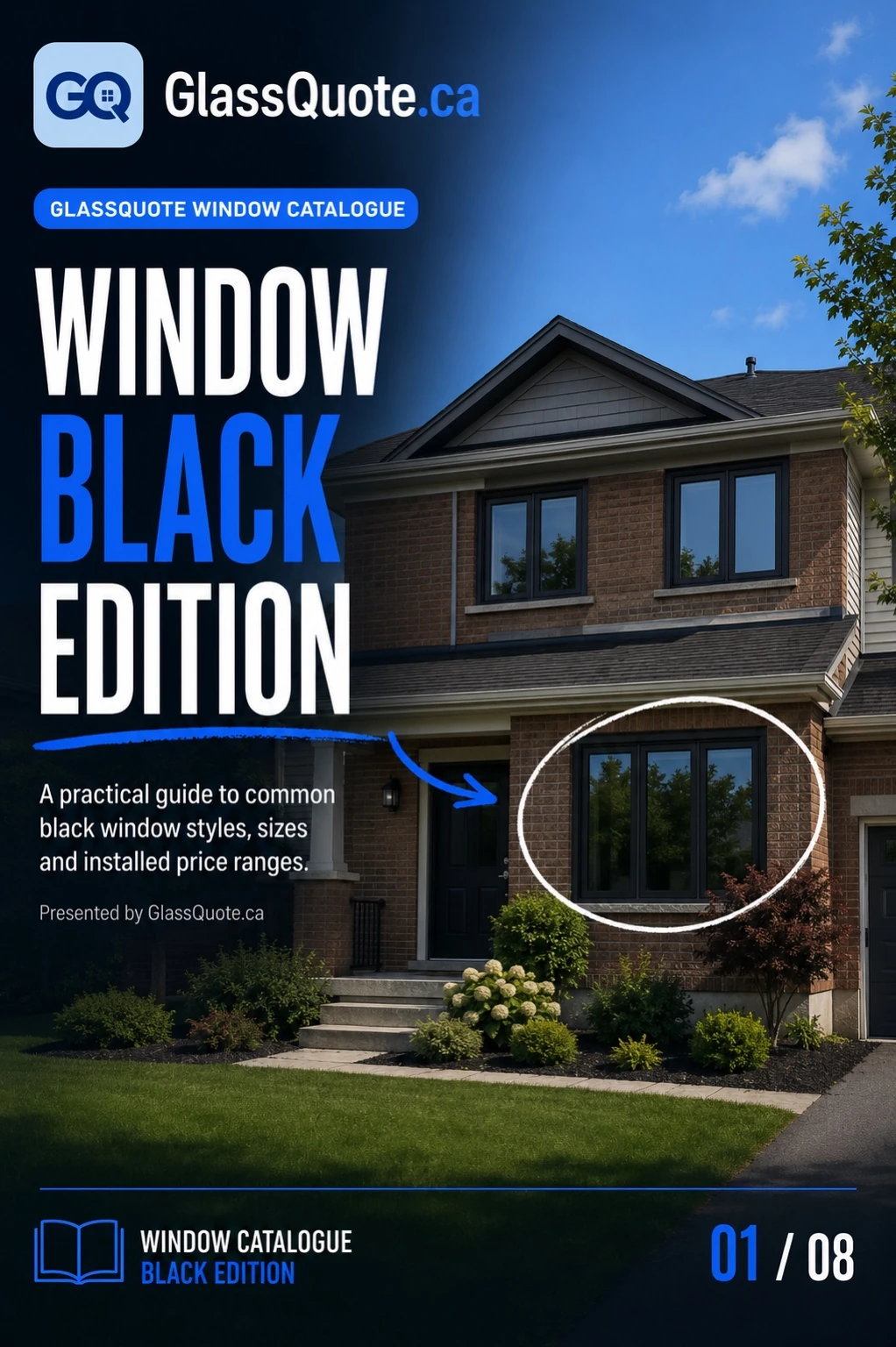
Featured in this order: Product Catalogue, Window Measuring Guide, then Window Black Catalogue.
Browse the available glass, window, door, shower, commercial, railing and emergency choices.
Measure common window styles and visible glass with simple visual examples.
Compare common black-frame window styles and installed-range planning examples.
No. It is a temporary safety, security or weather-protection measure. Final glass normally requires separate measurement, specification and fabrication.
Usually not when the replacement is insulated, tempered, laminated, shaped or otherwise custom. Temporary protection may be the immediate step.
Do not handle unstable, overhead or large broken glass without proper training and equipment. Keep people clear and describe the condition from a safe distance.
Provide the address, contact number, opening type, approximate size, photos from a safe location, whether the property is secure and any access restrictions.
Urgency and timing are collected because after-hours availability and labour may affect the final price. The online range is not a guarantee of immediate attendance.
Choose Emergency Cover, provide the safest available photos, note whether the property is exposed or unsecured, and include the best callback number.